
Get in the zone
By Bev Thompson.
Use your garden's natural microclimate
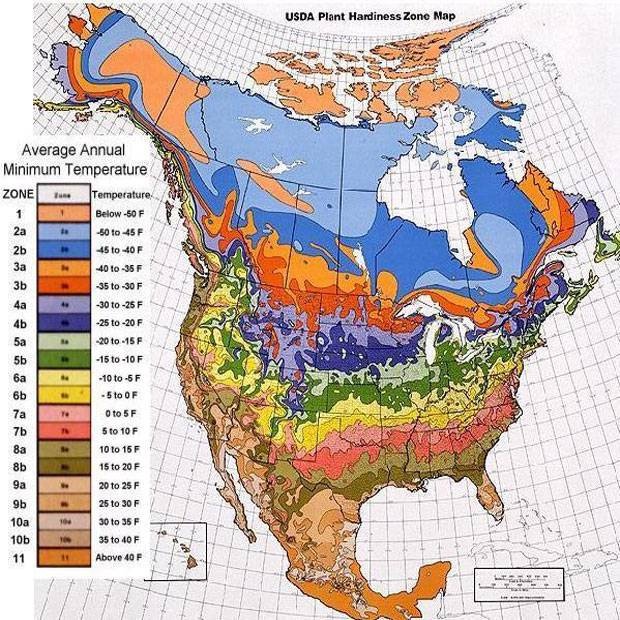
Before getting down to the micro level, let's consider the larger climate picture: the north American Hardiness Zone Maps has been updated in recent years, divides the continent into zones from zero to eleven, with eleven being the warmest.
On the map, the zones extend horizontally across the continent in sweeping wavy lines in like the pattern of oil or water. The main factor used to define the zones was the mean winter temperature, the next is the length of the frost-free period; other variables such as rainfall, wind and elevation were also considered. It's important to remember that the map was originally prepared to identify areas that share a common climate and can sustain similar woody plant materials-meaning shrubs and trees.
The zone's various shrubs and trees are hardy to, often appears on the plant label, but it seldom appears on the labels of perennials (although it's usually listed for perennials in catalogues and garden books and magazines). That's because the hardiness zone applies less to herbaceous perennials.
What the map doesn't show us is the phenomena of garden microclimates.
Herbaceous perennials and hardiness zones.
Herbaceous perennials die back to the ground in winter, allowing them to rely on insulating snow cover or mulch rather than surviving harsh, exposed temperatures like woody plants.
Your garden's conditions
Watch for clues
Perennials are affected more by the conditions in their particular situation, such as the amount of snow cover and wind exposure, or the protection of a brick wall or fence.
What the map doesn't show us is the phenomena of garden microclimates, or the differences between the various areas of your garden. The microclimate of your front garden may be very different from the back--in fact, it may vary within a few feet. The mountains, forests and oceans that determine our large climatic zones are replaced in the microclimate of the garden by buildings, fences, stone walls, trees, shrubs, paved surfaces and pools. The garden's relation to the sun-does it face north, south, east or west? - the amount of rainfall and the direction of the prevailing wind all influence a microclimate, whether it’s beneficial or harsh. To determine the different microclimates in your garden and choose plants to suit the areas, watch for clues.
Start now, in spring, so you can assess where the coldest and warmest areas lie.
Where did snow accumulate, and where did it melt first? Do the flowers in a small patch beside the house or garden shed building bloom early? Generally, building materials--rocks, bricks and concrete-- collect and hold solar heat, releasing it slowly during the night. This keeps the minimum temperatures in an acceptable range while, only a few feet away, temperatures may fall too low for young sprouts to survive. Heat traps in sunny sheltered areas are ideal for tender flowering plants or heat-loving vegetables like tomatoes or peppers.
Garden beds near a paved sidewalk will be warmer than those near the lawn or out in the open. A pool or a light coloured surface intensifies and bounces light onto surrounding plants, increasing the light they would otherwise receive. These areas, too, can be utilized for plants that need warmth and light to thrive.
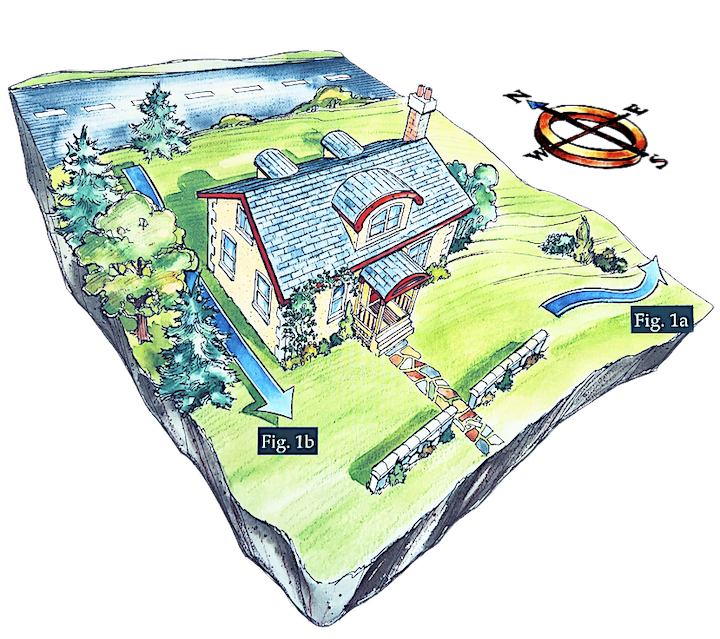
Frost collects in low-lying areas (Fig.la), such as at the bottom of a slope, and frost pockets also occur on the north side of a solid wall or dense hedge.
You c a n sometimes correct these conditions by thinning a hedge to allow air circulation, or filling a hollow with soil. Another alternative is to leave the situation as it is, stick to hardy, deep-rooted plans and mulch them heavily.
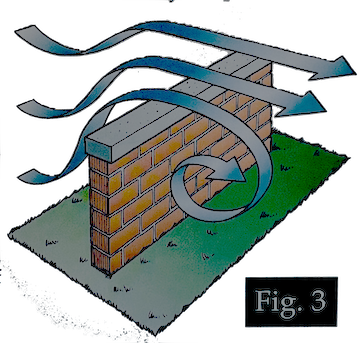
A wall or fence can create a rain shadow, with the ground receiving more mois-
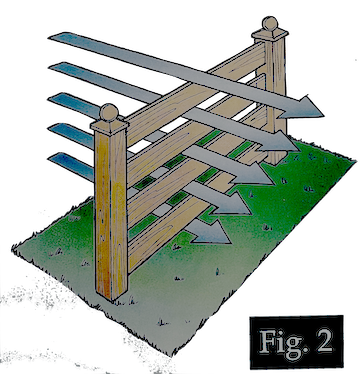
ture on the windward side (Fig.3). Wind tunnels, which can lower temperatures and damage some tender plants, sometimes existing narrow spaces between buildings and fences (Fig.1b). To lessen the effects of the wind, build an open, slatted fence at one end as a windbreak (Fig.2).
Fig 3
Depending on which side of the house you’re observing, areas under eaves may be hot, dry and sunny, or cool, dry and shady.
You may want to lay pea gravel and plant hardy cactus or sempervivum in the former; lady's mantle, sedums and tradescantia are among the plants that can cope with the latter conditions .
Fig.3
With the microclimates in your garden identified, you can place plants in the location they like, or experiment with tender plants from other zones. But don't overlook the possibilities of creating your own microclimates with subtle but real differences in temperatures and conditions from the rest of your garden-for example, erect a fence or wall to make a small, protected enclosure for exotic plants, or for sitting in on cool spring or fall days.
Just remember to leave a few open spaces to allow wind to flow through, or you'll have a downdraft as it blows over the top.
One of the large-scale success stories of using micro-climates come from the Canadian wine industry. After struggling unsuccessfully to cultivate the European grape varieties (namely Vitus Vonifera) early settlers, around the eighteen hundreds, realized the native species of grapes were ripening fully along the streams and under the trees. For the next hundred years the Canadian wine industry grew based on wine made from native species and their varieties of American hybrids and crosses. It remained for many years concentrated in regions benefiting microclimates found in areas such as in southern Ontario, and has now become the producer of some of the world's finest wines.
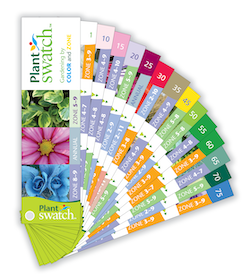
Each plant in PlantSwatch is categorized by its preferred Hardiness Zone. (The zone where the conditions are best for each plant).
